What a Florida 4-Point Inspection Covers — and What Fails One
If you're buying, selling, or re-shopping insurance on an older Florida home, there's a good chance you'll be asked for a 4-point inspection before a carrier will write the policy — and for a lot of homeowners, that request lands with a jolt of anxiety. Will the house pass? What if the roof is too old, or the panel is the wrong brand? The good news is that a 4-point inspection is predictable. The same handful of issues account for most of the trouble, and once you know what they are, you can get ahead of them.
A Florida 4-point inspection is a limited insurance inspection that documents the age and condition of a home's four major systems — roof, electrical, plumbing, and HVAC — so a carrier can decide whether to write or renew your policy. It's typically required on homes 30 to 40-plus years old (Citizens requires one at 20 and up), costs around $150, takes 30 to 60 minutes, and stays valid for about a year. It isn't pass/fail: the inspector documents what exists, and the insurer makes the call. Homes most often get flagged for an aging roof, an outdated electrical panel like Federal Pacific or Zinsco, or older plumbing such as polybutylene.
Why this matters in 2026
Florida's insurance market has been loosening. Rates have softened, new carriers have entered, and some insurers have eased their underwriting — a few have even pushed their 4-point threshold back from 20 years to 25 or 30. If you were declined or non-renewed in 2024 or 2025, you may have options now that you didn't before. But the 4-point inspection is still the gatekeeper: it's the document that tells a carrier whether your home is an acceptable risk, and a clean one is what lets you actually capture the better pricing that's finally available.
As a Florida-licensed home inspector (License #JE303969) and InterNACHI Certified Professional Inspector, I'll tell you what I tell every nervous seller: the inspector isn't there to judge your home or hunt for code violations. On a 4-point, I'm documenting four systems for an underwriter — material, age, and condition — and nothing else. Knowing exactly what that underwriter is looking at is most of the battle.
What a 4-point inspection covers
A 4-point looks at four systems and only four. It's a visual, non-diagnostic review — the inspector documents what's accessible and visible, photographs each system, and records ages and materials on a standardized form that goes to the insurer.
| System | What the inspector documents | What insurers worry about |
|---|---|---|
| Roof | Covering type, age, condition, remaining service life | Wind and water damage — the most common source of Florida claims |
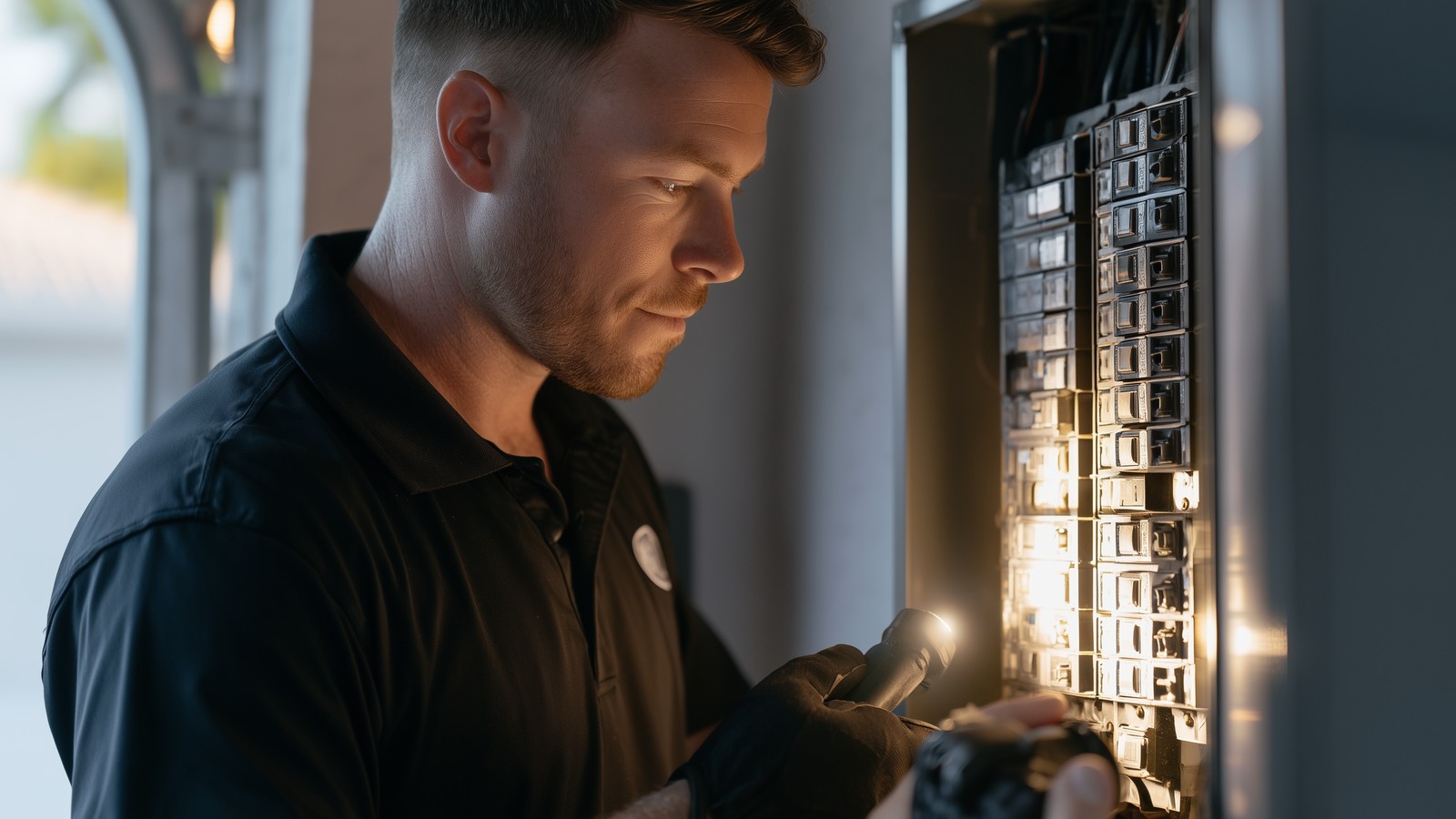
| Electrical | Panel brand, service capacity, wiring type, visible defects | Fire risk from outdated or defective components |
| Plumbing | Pipe materials, water heater age, visible leaks | Water-damage claims, which are costly and frequent |
| HVAC | System type, age, whether it's operational | Near-term failure and the damage a failure can cause |
That's the entire scope. A 4-point is not a full home inspection — it says nothing about the foundation, windows, appliances, or dozens of other things a buyer's inspection would cover. If you're buying, you'll usually want both: the 4-point to satisfy the insurer and a full residential home inspection to understand the property.
What actually fails a 4-point inspection
Here's the part everyone really wants to know. Across the four systems, a predictable set of issues account for most flagged reports.
Roof
The roof carries the most weight. Insurers scrutinize asphalt shingle roofs hardest once they pass roughly 15 years, while tile and metal are judged more on condition than age. Missing or curling shingles, visible patchwork, soft spots, or fewer than a few years of estimated remaining life will draw underwriting attention. A roof that's recently been replaced, with documentation, is the single best thing an older home can have going for it.
Electrical
Electrical issues are the most common source of conditional approvals and outright declines. The usual culprits:
- Federal Pacific (Stab-Lok) and Zinsco panels. These are frequent automatic flags. The U.S. Consumer Product Safety Commission investigated Federal Pacific breakers and aluminum wiring over long-standing concerns that the breakers can fail to trip under overload — a fire risk — and many Florida carriers simply won't insure a home that still has one.
- Aluminum branch wiring. Common in homes wired in the late 1960s and early 1970s. The CPSC has reported that homes with this older aluminum wiring are far more likely — on the order of 55 times — to develop fire-hazard conditions at connections than copper-wired homes. Insurers often require a CPSC-approved remediation before they'll write the policy.
- Double-tapped breakers, under-capacity service, cloth wiring, and fuse boxes round out the list.
Plumbing
Two materials drive most plumbing flags: polybutylene (a gray plastic pipe used roughly from the late 1970s into the mid-1990s, prone to failure) and galvanized steel (which corrodes from the inside out). An aging water heater — generally past 10 to 12 years — and any visible active leak will also be noted.
HVAC
The inspector records the system's age and confirms it runs. An air conditioner well past its typical 12-to-15-year service life, or one that isn't cooling, gets flagged — efficiency isn't the concern, reliability is.
What we typically see across Palm Beach and Broward: it's rarely the whole house that's the problem, it's one system. A 1980s home in beautiful shape gets held up at underwriting by a Federal Pacific panel nobody knew the brand of, or a run of polybutylene under a slab that the owners never had reason to think about. The home is fine to live in — it just trips a specific underwriting rule. That's why finding these things early, before they're a closing surprise, matters so much.
It's not actually "pass" or "fail"
Worth repeating, because it changes how you should think about all of this: a 4-point inspection has no pass/fail stamp. The inspector documents conditions objectively, and the insurance underwriter decides whether the risk is acceptable, acceptable with conditions, or not acceptable. "Failing," in practice, means the carrier declines, asks for repairs, or attaches conditions like an actual-cash-value roof endorsement. That distinction matters because many flagged issues are fixable, and a documented repair often turns a decline into an approval.
Found a red flag? How to prioritize
If your home has one of the issues above — or you suspect it might — here's how I'd think about what to tackle first:
- Federal Pacific or Zinsco panel: Replace it. It's usually a $1,500–$3,000 job, it removes a genuine safety hazard, and it resolves the insurability problem outright. This is the highest-priority fix.
- Aluminum branch wiring: Don't rewire the whole house reflexively. A CPSC-approved remediation (such as proper pigtailing at connections) is what insurers accept — get an evaluation first.
- Roof near end of life: If it's within a few years of replacement and you're re-shopping or selling, budget for it; a new roof also unlocks the largest wind mitigation credits separately.
- Polybutylene plumbing: Get it assessed. Some carriers decline outright; others accept it. Knowing where your carrier stands tells you whether replacement is necessary now.
- Recent upgrades you've already done: Find the permits and receipts. Documentation of a newer roof, panel, or re-pipe can be the difference between an approval and a denial.
The general rule: address true safety items (panels, active hazards) regardless, and let your specific carrier's tolerance guide the rest. Because underwriting rules vary so much between carriers, an independent agent is often the fastest path to a company that will accept your home as-is.
A quick note on the 4-point vs. the wind mitigation inspection
These two get confused constantly. A 4-point documents the condition of your systems to decide whether you're insurable. A wind mitigation inspection documents your home's hurricane-resistant features to lower your premium — a completely separate form and purpose. Most older Florida homes benefit from both, which is why we offer them together as an insurance inspection package. For the full breakdown on the wind side, see our guide to Florida's wind mitigation form and savings.
Frequently Asked Questions
What does a Florida 4-point inspection cover?
A 4-point inspection documents the age and condition of four systems: the roof, electrical, plumbing, and HVAC. The inspector records each system's material, age, and any visible problems, then submits a standardized report to your insurer. It's a limited insurance inspection — not a full home inspection of the entire property.
What fails a 4-point inspection in Florida?
The most common red flags are a roof near the end of its service life, outdated electrical panels like Federal Pacific or Zinsco, aluminum branch wiring, double-tapped breakers, polybutylene or galvanized plumbing, and an aging or non-working HVAC system. Technically nothing "fails" — the inspector documents conditions and the insurer decides whether to write the policy.
How old does a home have to be to need a 4-point inspection?
It varies by carrier. A 4-point is almost universally required at 40 years, commonly at 30, and Citizens requires one at 20 years and older. The 2026 market has loosened somewhat, with some carriers pushing their threshold back to 25 or 30 years, so it's worth asking your agent what your specific carrier requires.
How much does a 4-point inspection cost, and how long is it valid?
A standalone 4-point inspection is $150 at Accurate Building Inspections, or $250 bundled with a wind mitigation inspection in one visit. Most insurers accept a 4-point report that's less than 12 months old, though the exact window varies by carrier.
Will a Federal Pacific or Zinsco panel really get my insurance denied?
Often, yes. Many Florida carriers decline coverage on homes with Federal Pacific (Stab-Lok) or Zinsco panels, or require replacement before they'll write a policy, because of long-standing concerns that the breakers can fail to trip. Replacing the panel is the reliable fix, and it resolves both the safety and the insurability problem at once.
This article is part of our Florida Insurance Inspections series:
- Florida's new wind mitigation form and how much you can save — the pillar on the 2026 form and your premium savings
- How to read your OIR-B1-1802 wind mitigation report — the seven sections, decoded
- Wind mitigation vs. 4-point: which inspection your Florida home needs (coming soon)
- Federal Pacific and Zinsco panels: why Florida insurers flag them (coming soon)
You can also meet the inspectors behind these reports.
Schedule Your 4-Point Inspection
If your home is 30 years or older and you're buying, selling, or shopping carriers, getting the 4-point done early turns a potential closing surprise into a known quantity — and gives you time to fix anything that's flagged before it costs you a policy.
Accurate Building Inspections completes 4-point and wind mitigation inspections across South Florida and Central Florida, including Delray Beach, Fort Lauderdale, and Boca Raton. A standalone 4-point inspection is $150, or bundle it with wind mitigation for $250 in a single visit — with insurer-ready, photo-documented reports delivered within 24–48 hours.
Schedule online or call (786) 863-4866 to book.
Sources: U.S. Consumer Product Safety Commission, aluminum wiring and Federal Pacific Stab-Lok safety hazards; Citizens Property Insurance Corporation; Florida Office of Insurance Regulation; InterNACHI.
Frequently Asked Questions
Schedule your inspection
Ready to put this guidance to work? Our licensed Florida inspectors are here to help.