Florida's New Wind Mitigation Form: How Much Can You Save?
If you own a Florida home and haven't looked at your wind mitigation inspection lately, 2026 is the year to revisit it. On April 1, the state retired a form that had been in use since 2012 and replaced it with a rebuilt version — and it landed in the same year that Florida insurers, for the first time since 2015, are filing rate decreases instead of increases. The combination matters more than either change alone.
A wind mitigation inspection documents your home's hurricane-resistance features on Florida's official OIR-B1-1802 form, and by law every Florida property insurer must apply premium discounts for the features it verifies. Those discounts apply to the windstorm portion of your premium — typically 30% to 70% of your total bill — and Citizens caps the combined credit at roughly 88% of that windstorm portion. The inspection costs $150, takes under an hour, and the report stays valid for five years. For most Florida homeowners, it's the cheapest document that affects their premium.
Why this matters right now
Two things make this the right moment to act. First, the Florida Office of Insurance Regulation rolled out the updated OIR-B1-1802 effective April 1, 2026, the result of a statutory five-year review and a 2024 wind-loss study — the old form had been frozen in place for more than a decade. Most carriers begin scoring homes under the new version during a transition window in mid-2026, so a fresh inspection now is read under the current rules. Second, rate relief is finally arriving: Citizens approved an average statewide cut of about 8.7%, with the South Florida tri-county region seeing some of the largest decreases in the state. When you are already shopping or renewing, a current OIR-B1-1802 is the single document most likely to push your number lower.
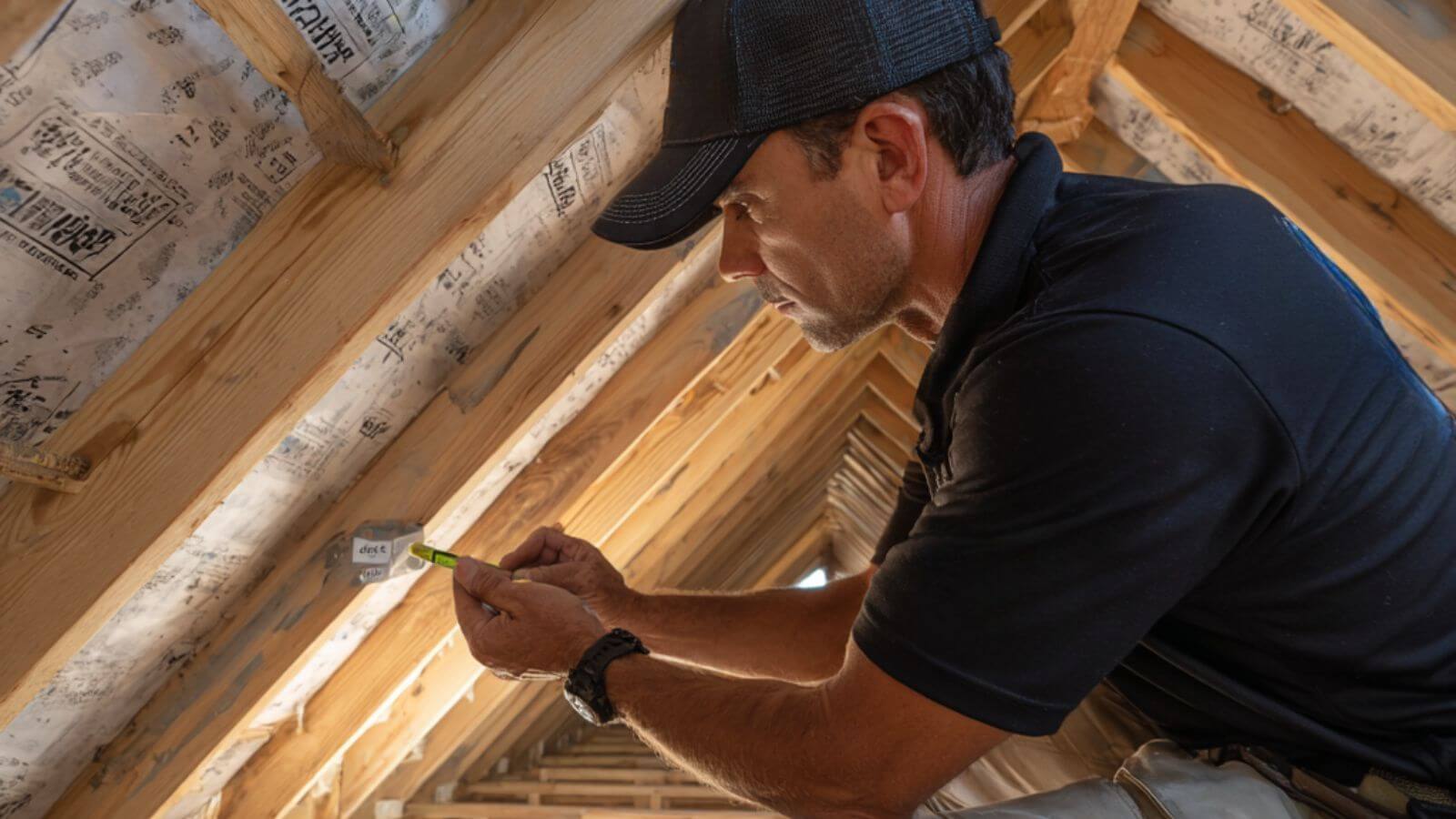
As a Florida-licensed home inspector (License #JE303969) and an InterNACHI Certified Wind Mitigation Inspector, I complete these inspections across South and Central Florida throughout the year. The 2026 update is the most substantial change I've seen to the process — not because the underlying physics of how a roof survives a hurricane changed, but because the form now demands cleaner photo and document evidence for every feature you want credited. A report that would have passed loosely in 2019 can get questioned in 2026 if the documentation is thin.
What actually changed on the 2026 form
The bones of the inspection are the same: an inspector evaluates the features that determine how your home holds up in high wind, and an insurer translates those features into discounts. What the April 2026 revision changed is how that evaluation is recorded.
The most concrete additions are two new data points — a design wind speed region and roof slope — that let insurers price wind risk with more precision than the old form allowed. The opening-protection section was also clarified, including a cleaner way to flag damaged windows or doors that need repair or replacement before they can earn a credit. Across the board, the form now expects more proof: permit records, product-approval labels, and clear photographs tied to each feature claimed.
For homeowners, the practical takeaway is simple. The features that save you money haven't changed, but sloppy documentation is now more likely to cost you a credit you actually qualify for. That puts a premium on having the inspection done by someone who knows what the new form requires.
The seven categories that decide your discount
Every OIR-B1-1802 scores the same seven categories. Each one feeds a discount on the windstorm portion of your premium. Here's what each documents — and, just as importantly, whether it's something you can realistically improve after the fact.
| # | Category | What it documents | Affordable to upgrade later? |
|---|---|---|---|
| 1 | Building code | The code in effect when the home was permitted (2002+ earns a baseline credit) | No — fixed at construction |
| 2 | Roof covering | Roofing material and whether it meets Florida product-approval standards | Yes — at your next roof replacement |
| 3 | Roof deck attachment | Nail type and spacing holding the deck to the trusses | Rarely — requires removing the roof |
| 4 | Roof-to-wall connection | Toe-nails, clips, single wraps, or double wraps (straps) | Sometimes — retrofit programs exist |
| 5 | Roof geometry | Hip roofs score highest; gable ends score near zero | No — effectively a rebuild |
| 6 | Secondary water resistance | A sealed roof deck or peel-and-stick barrier under the covering | Yes — at re-roof |
| 7 | Opening protection | Impact-rated windows, doors, and shutters across all openings | Yes — the most upgradeable category |
Notice the pattern: categories 1, 3, and 5 are essentially locked in when the house is built, while 2, 6, and 7 are the ones you can move. That's where most homeowners — and the My Safe Florida Home grant program — focus their dollars.
One rule trips people up constantly. Opening protection is all-or-nothing. To earn the credit, every exterior opening — windows, doors, skylights, and garage doors — has to be protected. In our experience inspecting homes across Fort Lauderdale and Palm Beach County, the most common way a homeowner leaves money on the table is a single unprotected opening. We routinely find houses with impact-rated windows on three sides and one original sliding glass door or an unrated garage door that quietly disqualifies the entire opening-protection discount. Fixing that one opening can unlock a credit the homeowner thought they already had.
How the savings math actually works
The discount never applies to your whole premium — only to the windstorm portion, which in Florida commonly runs 30% to 70% of the total bill depending on your home's value and how close you are to the coast. Within that windstorm portion, verified features stack toward a maximum combined discount that Citizens caps at roughly 88%.
In plain terms: a coastal Miami-Dade home with a large windstorm component and strong mitigation features has far more to gain than an inland home with a small windstorm component. That's why a blanket "you'll save 45%" claim is misleading — the honest answer is that savings range widely. How much any individual home saves depends on its features, its windstorm exposure, and its carrier. What I can tell you is that at $150, documenting what your home already has is the least expensive thing you can do that affects your windstorm premium at all.
A few realities worth knowing before you book:
- The credit reaches you at renewal, not mid-policy, so timing your inspection ahead of your renewal date matters.
- Existing features transfer with the home. If you're buying, ask the seller for their most recent OIR-B1-1802 — you may inherit discounts from day one.
- Homes built in 2002 or later under the modern Florida Building Code often already have strong scores baked in. Don't assume a newer home won't benefit; assume the opposite and verify.
Should you schedule a new inspection in 2026?
Here's the decision framework I'd walk a homeowner through. A new wind mitigation inspection is worth scheduling this year if any of the following apply:
- You've never had one done. You can't claim discounts for features no one has documented.
- Your current OIR-B1-1802 is approaching its five-year expiration. An expired form earns you nothing.
- You've replaced your roof, windows, or doors since your last inspection. New features mean new credits — but only once they're on a current form.
- Your last report predates April 1, 2026, and your renewal falls after your carrier's mid-2026 transition. A fresh report is scored under the rules your insurer is now using.
- You're buying or selling. For buyers, the report sets your insurance cost from closing; for sellers, it's a documented selling point.
If two or more of these apply to you, it's worth scheduling. If none apply — your form is recent, accurate, and reflects your home as it stands — you can wait until it nears its five-year mark. The goal isn't to inspect for the sake of inspecting; it's to make sure every feature your home actually has is documented on a form your insurer will honor.
Frequently Asked Questions
What changed in Florida's wind mitigation form in 2026?
The updated OIR-B1-1802 took effect April 1, 2026. It adds two new items — design wind speed region and roof slope — reorganizes the seven scoring categories, and requires more photo and document proof for each feature an inspector claims.
How much can a wind mitigation inspection save in Florida?
Savings depend on your home, your location, and your carrier. The discount applies to the windstorm portion of your premium, which in Florida commonly runs 30% to 70% of the total bill, and Citizens caps the combined credit at roughly 88% of that portion. Your actual credit depends on which of the seven scored features your home has.
How long is a Florida wind mitigation inspection valid?
The OIR-B1-1802 is valid for up to five years from the inspection date, provided no material changes are made to the structure. After five years, a new inspection is needed to keep your discounts active.
Do I need a new inspection because of the 2026 form update?
Not necessarily. Reports completed before April 1, 2026, remain valid for their full five-year window. But if your form is aging out, or you've replaced your roof, windows, or doors, scheduling a new inspection under the updated form usually makes sense.
How much does a wind mitigation inspection cost in Florida?
Accurate Building Inspections charges $150 for a standalone wind mitigation inspection, or $250 bundled with a 4-Point inspection as our insurance inspection package. The inspection takes under an hour.
This article is the cornerstone of our Florida Insurance Inspections series. Upcoming articles will cover:
- Reading your wind mitigation report, section by section, on the updated OIR-B1-1802
- What a Florida 4-Point inspection actually covers — and why insurers require it on older homes
- Wind mitigation vs. 4-Point: which inspection your home actually needs
- Federal Pacific and Zinsco electrical panels: why Florida insurers flag them
Together, this series is built to be the clearest plain-English guide to the inspections Florida insurers care about. You can also learn more about our licensed inspection team and how we approach insurance-related inspections.
Schedule Your Wind Mitigation Inspection
With the 2026 form now in effect and rates finally easing, this is a good window to get your home documented correctly.
Accurate Building Inspections serves homebuyers and homeowners across South Florida and Central Florida, including Fort Lauderdale, West Palm Beach, and Miami, with detailed, photo-documented reports built to the current OIR-B1-1802 standard. Inspections start at $150, or $250 bundled with a 4-Point as part of our insurance inspection package.
Schedule online or call (786) 863-4866 to book your inspection. Learn more about our wind mitigation inspections or how they fit alongside a full residential home inspection.
This article is general information, not insurance or legal advice. Discount amounts vary by insurer, property, and location — confirm current details with the Florida Office of Insurance Regulation, your carrier or agent (including Citizens Property Insurance), and the standardized form requirements under Florida Statute §627.0629. Wind mitigation inspectors are certified through bodies such as InterNACHI.
Frequently Asked Questions
Schedule your inspection
Ready to put this guidance to work? Our licensed Florida inspectors are here to help.