
Mold After a Storm in Florida: The 24–48 Hour Window
The rain stops, the water gets mopped up, and the house looks fine again. That's the moment most Florida mold problems actually begin — not during the storm, but in the two days after it, while everyone assumes the danger has passed. Water that soaked into drywall, insulation, and the cavities you can't see is still there, and in Florida's heat it's already working.
After a storm or roof leak lets water into a Florida home, you have roughly 24 to 48 hours before mold begins to establish. The EPA's guidance is direct: if wet materials are dried within that window, mold usually won't grow. Miss it, and mold doesn't politely stay where the water landed — it spreads into wall cavities, insulation, and, most consequentially, the air conditioning system, which then distributes spores into every room each time it runs. What you do in the first 48 hours matters more than anything you do afterward.
That's true whether or not the storm ever had a name — which is exactly why this year is worth a word of caution.
Why this matters in 2026
Forecasters expect a quieter-than-usual Atlantic season in 2026. Colorado State University's July outlook was revised down to around nine named storms on a strengthening El Niño, potentially one of the least active seasons in over a decade. That's genuinely good news — but it carries a trap. A calm forecast breeds complacency, and mold doesn't read forecasts.
An ordinary Florida rainy-season afternoon can drop several inches of rain in an hour, find its way through a tired roof, and flood a bedroom without a single named storm on the map. The peak of the season still runs from late August into October regardless of the totals. The 24–48 hour clock starts the same way whether the water came from a hurricane or a Tuesday thunderstorm.
As a Florida-licensed mold assessor (MRSA #MRSA5406) and NAERMC Certified Mold Hygienist, the thing I want homeowners to take from a slow forecast isn't relief — it's readiness. The homes that come through a wet summer clean are the ones where somebody moved fast the first time water got in.
The 24–48 hour window
Mold is not a slow, gradual visitor in Florida. Spores are already present in the air of every home; they don't need to arrive, only to get wet. Once moisture lands on drywall, wood, carpet, or insulation and the temperature is warm — which, in a Florida summer, it always is — colonies can begin establishing within a day or two.
The window is the whole game. Dry the materials fast enough and the spores never activate; the EPA is explicit that materials dried within 24 to 48 hours generally won't grow mold. Let those materials stay damp past that point, and you've crossed from a cleanup into a remediation. The difference between the two is measured in days, not dollars spent or square footage — which is why speed, not scrubbing, is what actually protects a home.
The catch is that "dry" means dry all the way through, not dry on the surface. Water wicks into wall cavities behind baseboards, under flooring, and into the paper backing of insulation, where a towel and a box fan never reach. The surface can feel dry while the cavity behind it stays wet for a week.
Water doesn't stay where it lands
Here's the part almost no storm-cleanup advice mentions, and it's the one that turns a contained leak into a whole-house problem.
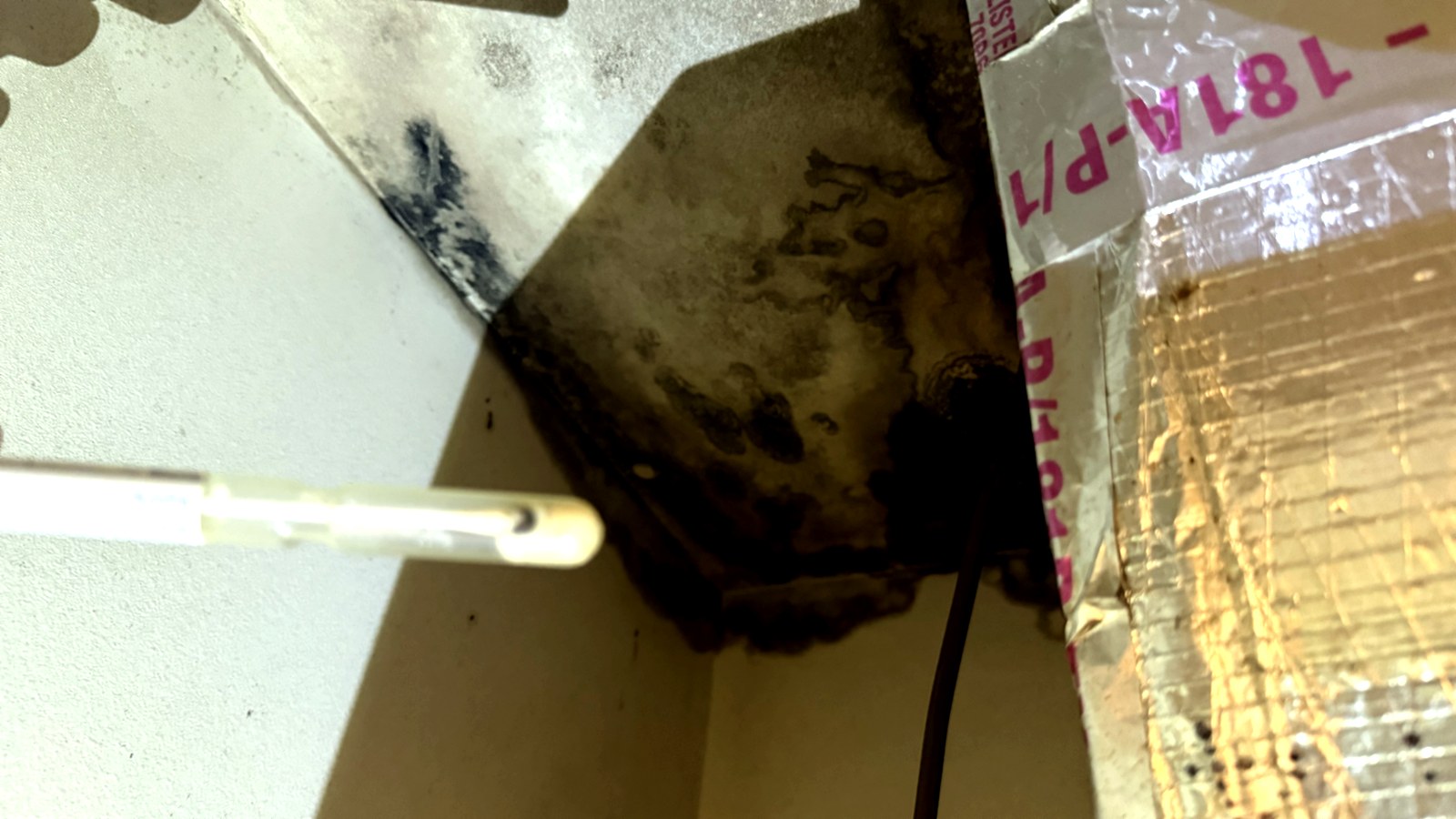
On a recent South Florida inspection, a roof leak had let water into the home. By the time we assessed it, the mold wasn't confined to the ceiling beneath the leak — it had reached the air handler in the hall closet and the duct system attached to it. The homeowner had kept the AC running the entire time, which meant that for days the system had been pulling spores in and pushing conditioned, contaminated air out into every room in the house.
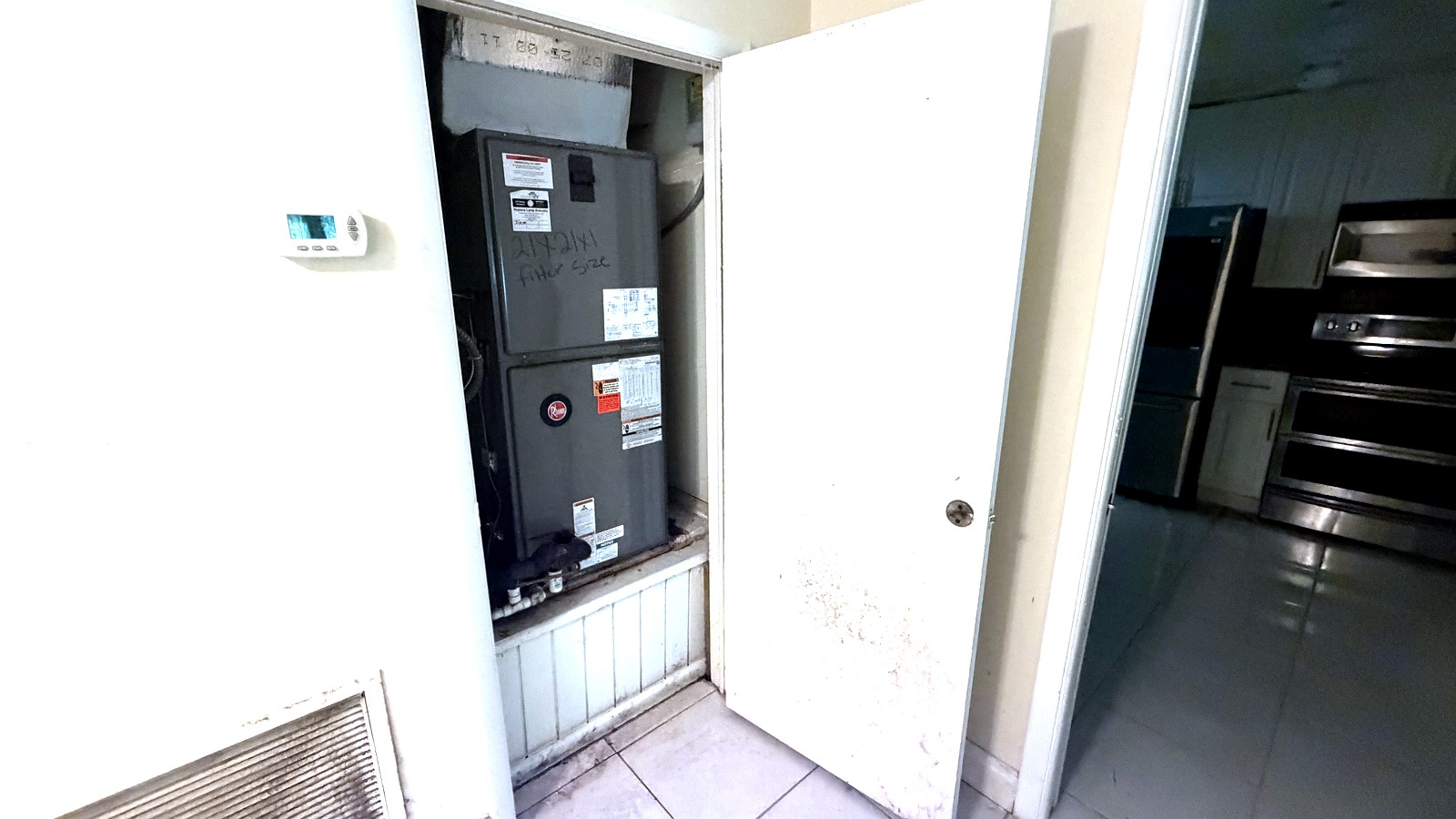
This is the mechanism that makes HVAC involvement so serious. Metal ductwork itself doesn't feed mold, but the dust, insulation liners, and moisture inside the system do — and a running air conditioner is a distribution network. A leak in one room becomes spores in all of them. A musty smell that gets noticeably stronger when the AC switches on is the classic warning sign that the system, not just a wall, is now part of the problem.
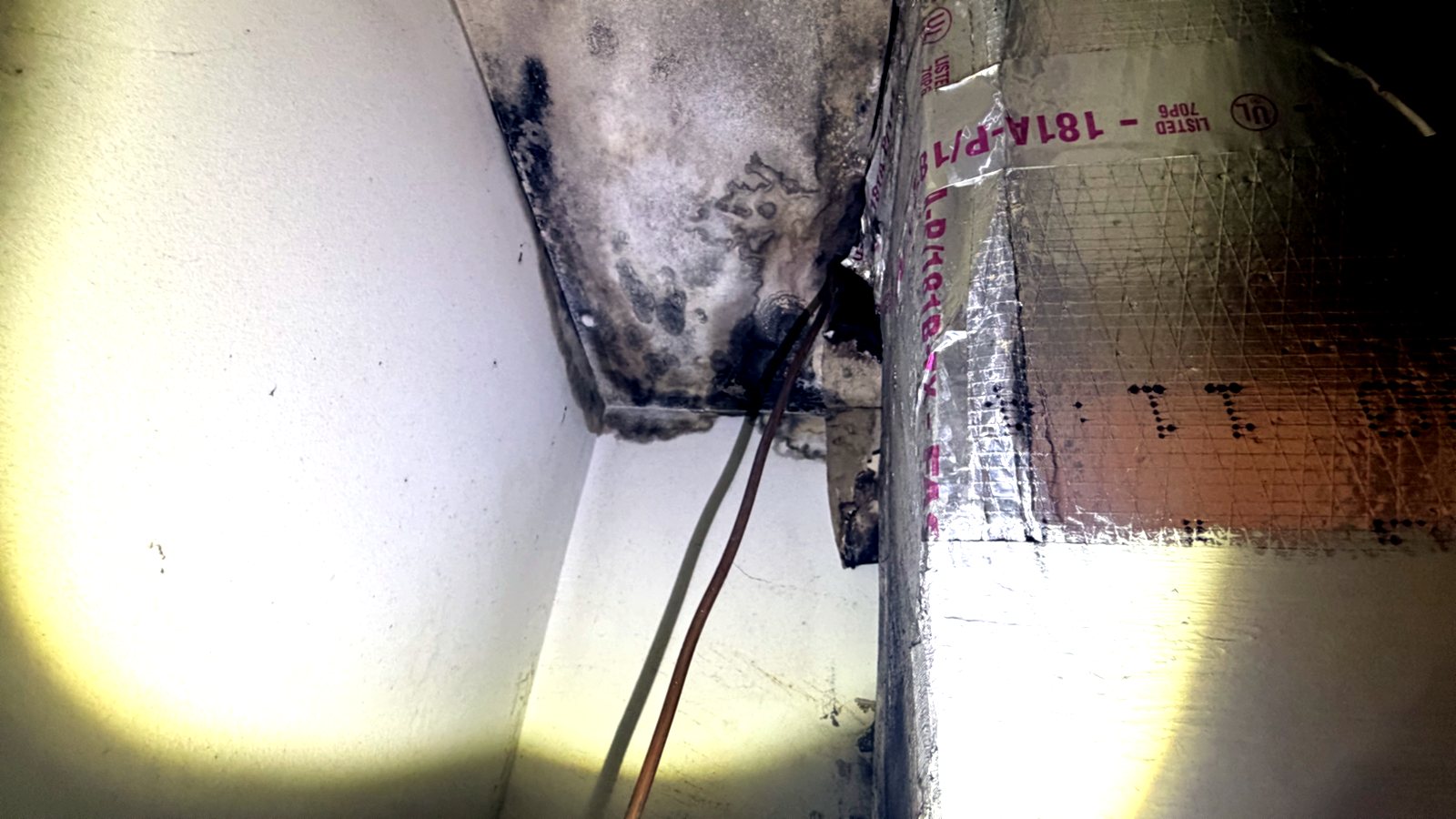
That's why, after any real water intrusion, the air handler and ductwork can't be an afterthought. On that job we sampled at the plenum itself — not just the visible ceiling stain — because the report has to reflect where the mold actually went, which is wherever the air carried it.
What to do in the first 48 hours
If water gets into your home, the response that protects both the house and any future insurance claim is the same. In order:
- Document before you touch anything. Photograph and video the water, the source, and every affected area while it's still wet. This is the evidence that the damage was sudden — the single most important factor in whether a mold claim is later covered.
- Stop the source if you safely can. Tarp the roof, shut off a supply line, move belongings out of standing water. Don't take risks with electricity or a compromised ceiling.
- Start drying immediately. Fans, dehumidifiers, open windows only if the outside air is drier than inside. The goal is to beat the 24–48 hour window on every wet material, not just the ones you can see.
- Report it to your insurer promptly. Delay is one of the most common reasons claims get reduced or denied. Prompt reporting also gets a professional drying crew moving faster.
- Don't gut it before it's documented. Tearing out wet drywall and carpet before the damage is recorded can erase the proof that the intrusion was sudden rather than a long-neglected leak. Document first, demolish second.
- Have the HVAC and hidden areas assessed if water reached wall cavities, insulation, or the air handler. This is where a licensed assessment earns its keep.
Why a post-storm assessment includes the HVAC
A quick look at a ceiling stain tells you a leak happened. It doesn't tell you where the moisture traveled or whether the air system carried mold through the house. That's the difference between noticing a problem and documenting its full extent — which is what a licensed mold assessment is for.
A mold assessment is narrower and more specialized than a general home inspection — it exists specifically to trace moisture and what it left behind. It uses moisture readings to find water still hiding in cavities, inspects the air handler and accessible ductwork rather than assuming they're fine, and backs findings with lab sampling. If the HVAC is involved, that changes the scope of what needs to be cleaned and confirms whether the air in the home is safe to breathe — a question a visual glance can't answer. Pairing it with indoor air quality testing is worth considering when someone in the home is reacting to the air.
It matters who performs that assessment. Under Florida's Mold-Related Services Act, an assessor is barred from also remediating a property their company assessed within the prior 12 months — a firewall the state built so the person telling you how bad it is isn't the person profiting from the fix. Accurate Building Inspections assesses and does not remediate, which means our reading of how far the mold spread is independent of who gets paid to remove it.
Sudden, gradual, and your claim
The storm timing connects directly to whether your insurance pays. As we cover in our guide to whether Florida homeowners insurance covers mold, coverage generally turns on whether the water was sudden and accidental or gradual. A storm-driven roof leak is usually the covered kind — but only if the record supports it.
This is why the first-48-hours documentation isn't just good cleanup practice; it's claim protection. If wet materials sit for two weeks and the mold is discovered later, an adjuster can reasonably read the loss as gradual, and the sudden-event coverage evaporates. The homeowner who photographed everything on day one and dried aggressively has a fact pattern. The one who waited has an argument. For anything involving a disputed or denied claim, a licensed Florida attorney is the right call — my role is documenting the building, not the policy.
Frequently Asked Questions
How fast does mold grow after water damage in Florida?
Under Florida's warm, humid conditions, mold can begin growing within 24 to 48 hours of water exposure. The EPA's guidance is that if wet materials are dried within that window, mold usually won't grow — which is why the first two days matter more than anything else you do afterward.
Can mold from a roof leak get into my AC system?
Yes, and it's one of the most overlooked consequences of water intrusion. Once moisture reaches the air handler, ductwork, or the insulation inside them, mold can establish and the running AC then circulates spores into every room. A musty smell that gets stronger when the system kicks on is a classic sign the HVAC is involved.
What should I do in the first 48 hours after a storm leak?
Photograph everything before you move or remove anything, stop the water source if you can do so safely, and start drying immediately with fans and dehumidifiers to get under the 24–48 hour window. Report the damage to your insurer promptly, and don't tear out wet drywall or carpet before it's documented — that documentation is what establishes the damage was sudden.
Does a below-normal hurricane forecast mean I don't need to worry about mold?
No. Mold doesn't need a named storm — an ordinary Florida rainy-season downpour through a roof leak floods a home the same way, and the 24–48 hour clock starts either way. A quiet seasonal forecast is a reason to stay ready, not to lower your guard.
Should I get a mold assessment after water intrusion even if I dried everything?
If the water reached wall cavities, insulation, or the HVAC system, drying the visible surfaces may not have reached the hidden moisture. A licensed assessment uses moisture readings and sampling to confirm whether mold established out of sight — including in the air handler and ducts — before you rebuild over it.
Will insurance cover mold caused by a storm?
Storm-driven water intrusion is generally a sudden, covered event, so mold that follows often has a valid claim — but the outcome hinges on documentation and timing. If the leak is later judged to have been gradual, or if the evidence is torn out before it's recorded, the claim can be denied. See our guide on whether Florida homeowners insurance covers mold for the full picture.
This article is part of our Florida Mold & Indoor Air Quality series:
- Does Florida homeowners insurance cover mold? — the pillar on coverage, the sudden-vs-gradual rule, and the sublimit most people never check
- What a Florida mold assessment involves — and why your assessor shouldn't remediate (coming soon)
- Why your AC is the #1 mold source in Florida homes (coming soon)
If you're weighing the insurance side more broadly, our Florida Insurance Inspections series covers the inspections that affect your policy — including what a 4-point inspection looks at, which includes the age and condition of your roof.
You can also meet the inspectors behind these reports.
Schedule a Post-Storm Mold Assessment
If water got into your home this season — from a storm, a roof leak, or a rainy-season downpour — the smartest move after drying out is to confirm where the moisture actually went before you rebuild over it.
Accurate Building Inspections performs licensed mold assessments and indoor air quality testing across South Florida and Central Florida, including Delray Beach, Fort Lauderdale, and Boca Raton. A mold assessment is $550 and includes the HVAC and hidden-moisture check a visual glance can't provide — with lab-backed, photo-documented reports. We assess; we don't remediate, so the findings stay independent of the fix.
Schedule online or call (786) 863-4866.
Sources: U.S. Environmental Protection Agency, A Brief Guide to Mold, Moisture and Your Home and Mold Cleanup After a Flood; FEMA — Dealing With Mold & Mildew After a Flood; Florida Statute 468.8419 (Mold-Related Services); Colorado State University Tropical Weather & Climate Research.
Frequently Asked Questions
Schedule your inspection
Ready to put this guidance to work? Our licensed Florida inspectors are here to help.